


Hosted by Keith Conrad, Bringing Up the Lights pulls back the curtain and gives audiences a behind the scenes glimpse into the development of major theatrical productions from the ground up — one episode at a time, each profiling a different person behind the show.
This season, Conrad has turned his spotlight to Chicago Shakespeare Theater, and more specifically to the landmark theatrical event of CST’s 40th Anniversary, with two plays being performed in repertory by one masterfully talented company of 14 Chicago actors, under the direction of Artistic Director Edward Hall.

Episode 5: Lights, Sound, and a Sun Roof
Underneath the stage at Chicago Shakespeare, there’s a mechanism called the sunroof. It drops down, slides away, and opens a hole for a lift to rise through. Both The Winter’s Tale and A Midsummer Night’s Dream use it, and this season there’s something built into that same mechanism that’s never existed on that stage before.
That’s the territory of Tyler Metoxen, Chicago Shakespeare’s technical director. Tyler talks about getting into theater in ninth grade, never wanting to be on stage himself, and a career path, from the Santa Fe Opera to the Utah Shakespeare Festival to Milwaukee, that ran almost entirely through repertory companies before he ever landed in Chicago.
He explains what a technical director actually does, why the line between his department and props is blurrier than you’d think, and why “it works most of the time” isn’t nearly good enough on a live stage. He also covers why Winter’s Tale and Midsummer were never treated as two separate builds, down to the shared floor both productions had to be planned around together.
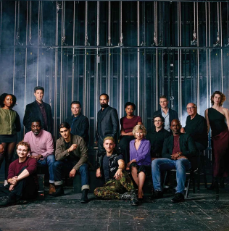
Episode 4: Catching Lighting in a Bottle
Somewhere in this season’s rep is an actor who can convincingly unravel with jealousy as a king in The Winter’s Tale, then turn around a few nights later and play one of the goofiest supporting roles in all of Shakespeare. Finding that actor, before anyone else even knows he’s the answer, is the job of Bob Mason, Chicago Shakespeare Theater’s casting director.
Bob talks about growing up in a small town in southwestern New York, a college acting class that hooked him on Shakespeare’s language, and fifteen years acting in Chicago before a former classmate talked him into casting instead. He explains how casting has changed since the pandemic, what it’s like working with Edward Hall’s very specific audition process, and the particular puzzle of casting a true repertory production for the first time: a single company of actors who all need to work in two different plays, with their own doubled pairings and tonal shifts to balance.
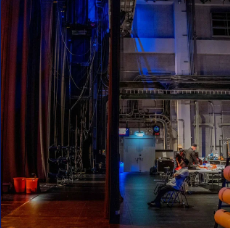
In both The Winter’s Tale and A Midsummer Night’s Dream, it snows on stage. That’s a small piece of a much bigger puzzle for Wendy Stark Prey, Chicago Shakespeare Theater’s director of production. Her job is to take everyone else’s vision and figure out how to build it, night after night, without anyone slipping on stage.
Wendy talks about how she got into theater almost by accident, through speech and debate club, and how a costume background led her to run one of the largest costume shops in the country before eventually landing in production management. She explains how LED screens and projections are changing what’s possible on stage, and why newer technology doesn’t always mean a better show. She also covers the specific headaches of a theater that sits on Navy Pier, right on the lake, from HVAC systems that can ruin a scene to a live flame effect that needed sign-off from the Chicago Fire Department.
And she breaks down the real puzzle of this season: two plays, one set, one cast, and two production teams who each see it a little differently.
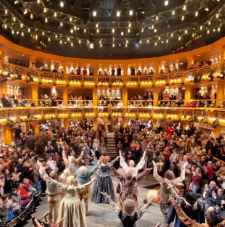
Edward Hall is the artistic director of Chicago Shakespeare Theater, and this fall he’s directing two Shakespeare plays at the same time with the same company of actors. He has no directing degree. He learned the job by doing it.
Edward tells the story of how he got here: acting at university in Leeds, drama school in North London, and borrowing about fifteen hundred pounds to take a new play to Edinburgh. His big break came at a small theater outside London, where he was handed Othello, and that led to Propeller, the company he ran for twenty years. Along the way we get a Henry V that took the audience outside to invade France, complete with a real horse.
He also talks about directing radio, television, and video games, why Shakespeare should be treated as a modern writer and not a museum piece, what it’s like to put “the punk next to the pinstripe” on Chicago’s stages, and what he hopes audiences take home from A Midsummer Night’s Dream and The Winter’s Tale.
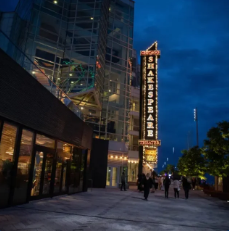
Episode 1: Two Plays, One Theater
Chicago Shakespeare Theater is turning 40, and this fall it’s doing something it has never done before: staging two Shakespeare plays at once, with the same company of 14 actors. A Midsummer Night’s Dream and The Winter’s Tale will run in repertory, and someone has to make the calendar work.
That someone is Kimberly Motes, executive director of Chicago Shakespeare Theater. She started the job in October 2023. In this episode, Kimberly explains how she went from high school theater kid to Kennedy Center intern to running one of Chicago’s biggest stages. She also covers how a season gets planned, why her job is a lot like running a ballpark, and what it takes to keep about 440 people on the payroll and one very ambitious double-header on track.